

You can visit Rome, admire the Colosseum, toss a coin into the Trevi Fountain, and taste a plate of pasta in a trattoria. However, if you truly want to understand Italy, you need to cook it. Finding the best cooking class in Rome means stepping into a restaurant filled with the scent of fresh basil and flour dust dancing in the sunlight.
In this guide, you’ll discover what makes a class unforgettable, how to choose the right experience, and why learning to make pasta in Rome is more than just a lesson. Ultimately, it becomes a memory you carry home.
What Makes the Best Cooking Class in Rome?
Not all classes are the same. Instead, the most memorable experiences combine authenticity, atmosphere, and genuine human connection.
So, what should you look for?
-
Local chefs who share family stories and culinary traditions
-
Hands-on preparation rather than simple demonstrations
-
Small group cooking class in Rome settings for personal attention
-
Central locations in historic neighborhoods
-
Fresh, high-quality ingredients
An authentic Italian cooking class in Rome should feel warm and welcoming. Rather than watching a show, you should feel part of the kitchen itself.
At Eat and Walk Italy, for example, classes take place in the heart of Rome, just steps from Piazza Navona. Here, you cook, laugh, taste, and finally sit down together to enjoy what you’ve created.

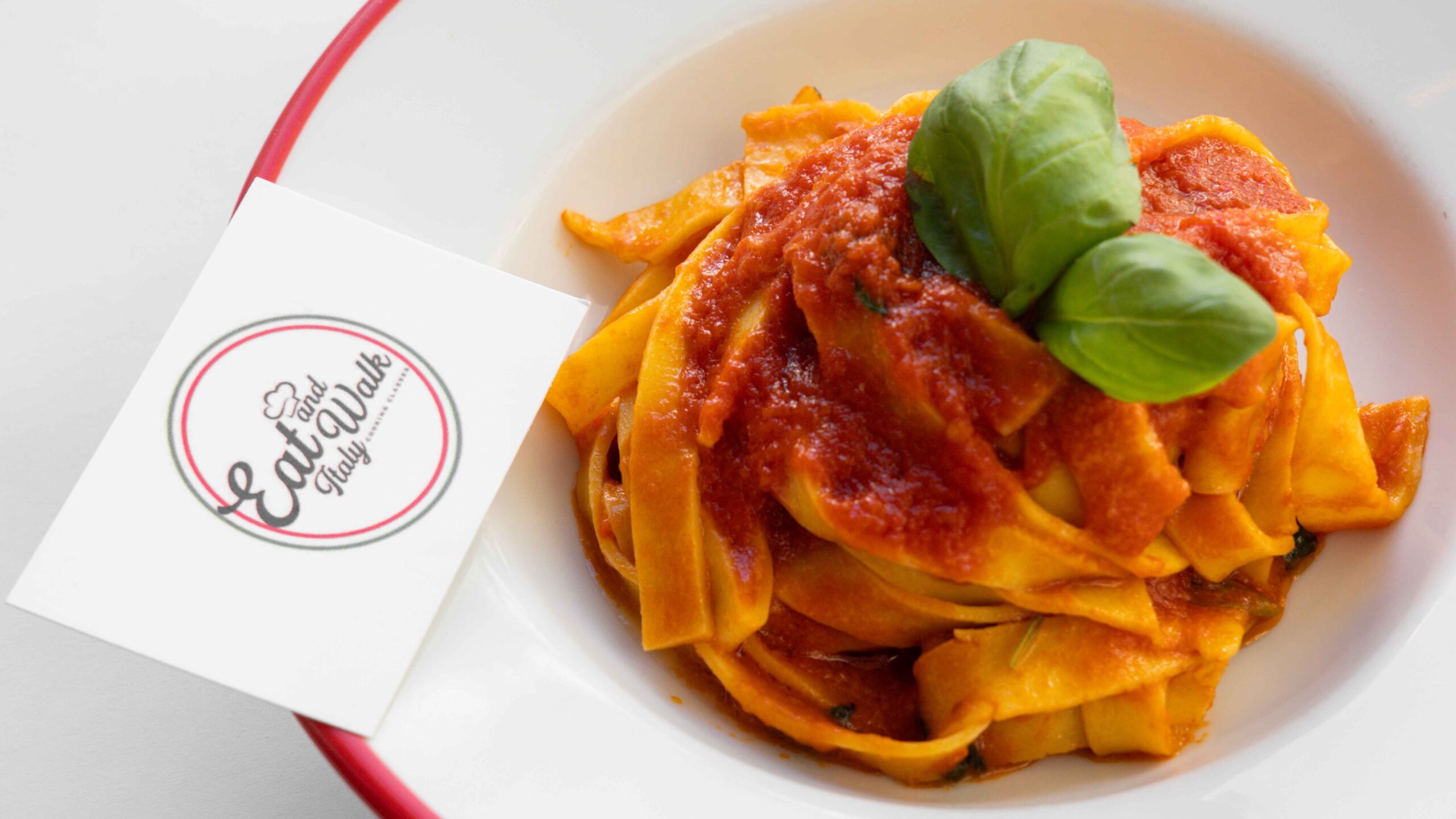
Fresh Fettuccine Pasta Made During Our Cooking Class.
Why Fresh Pasta Is the Heart of the Experience
If there is one dish that defines Italian culinary identity, it is pasta. Therefore, learning how to prepare it from scratch connects you to centuries of tradition.
Flour and eggs come together under your hands. Gradually, the dough transforms. With each movement, kneading becomes rhythmic and almost meditative.
Fresh Pasta: A Roman Tradition
Although Rome is famous for sauces such as:
-
Cacio e Pepe (pecorino romano and black pepper)
-
Amatriciana (tomato, guanciale, pecorino)
-
Gricia (the “white” version of Amatriciana, without tomato)
the true magic actually begins with the pasta itself.
During the best pasta making class in Rome, participants learn how to create elastic dough and understand how thin fresh fettuccine should be. Moreover, you discover which sauce pairs perfectly with each shape.
Beyond technique, there are small secrets rarely written in recipe books. For deeper insight into traditional Roman sauces, you can explore historical food references through institutions such as the Accademia Italiana della Cucina, which preserves Italy’s gastronomic heritage.
Small Groups Create a More Personal Experience
Imagine trying to learn pasta making in a room with 30 people. Details are missed, and hands barely touch the dough.
Now picture a small group cooking class in Rome. The chef’s voice is clear. Questions are welcomed. Guidance feels personal.
Because of the intimate setting, participants can:
-
Interact directly with the chef
-
Receive hands-on corrections
-
Enjoy a relaxed atmosphere
-
Connect with fellow travelers from around the world
As a result, cooking becomes a shared story. While shaping ravioli, smiles are exchanged. Meanwhile, glasses of wine are raised when the tiramisu is ready.
Beyond Recipes: Discover True Roman Culinary Traditions
An authentic Italian cooking class in Rome is not only about ingredients; it is about culture.
For instance, you learn why tiramisù literally means “pick me up.” At the same time, seasonal produce and regional traditions take center stage. Most importantly, the class reveals how food gathers families together every Sunday.
On our About Us page, you can read how Eat and Walk Italy was founded in 2015 by Caterina Olivieri with one simple idea: transforming love for hospitality into unforgettable culinary experiences.
Each session blends:
-
The history of Roman cuisine
-
Cultural anecdotes
-
Practical cooking techniques
-
A final shared meal around the table
Eventually, when you sit down to taste what you’ve prepared, something shifts. Rome feels closer. Warmer. More personal.
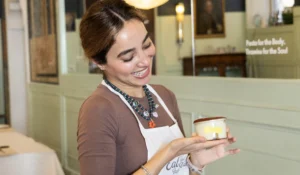
Happy Client Showing Her Own Tiramisù!
From Pasta to Tiramisu: What You’ll Master
Depending on the experience you choose, menus and techniques may vary. Nevertheless, every class remains fully hands-on and deeply rooted in authentic Italian tradition.
In a pasta-focused experience, for example, you may prepare:
-
Fresh fettuccine from scratch
-
Homemade ravioli with seasonal fillings
-
Classic Roman dessert, Tiramisù
Alternatively, other classes highlight:
-
Pizza dough made and shaped by hand
-
Baking techniques for a perfectly crisp crust
Regardless of the menu, the journey is always the same: from flour-covered hands to a shared table in the heart of Rome.
If you’re exploring additional activities, you can combine your class with our City Tours. Likewise, agencies and larger groups can discover tailored options in our dedicated section.
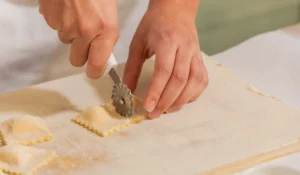
Cutting Stuffed Ravioli Pasta
When Is the Perfect Time to Join a Cooking Experience in Rome?
Every season offers something distinctive.
Spring brings markets overflowing with artichokes and fragrant herbs. Meanwhile, summer tomatoes become intensely sweet and sun-ripened. During autumn, Roman sauces grow richer and more comforting. Winter, on the other hand, transforms the kitchen into a warm and intimate refuge.
Morning classes fill the space with golden Roman light. In contrast, evening sessions glow with candlelit warmth and the soft sound of wine glasses clinking.
No matter the season, the experience remains timeless.
Related post