


Rome, where ancient history and vibrant culture are intertwined, boasts an astonishing array of more than 900 churches. Each of these architectural wonders tells a unique story of faith, art, and history. To visit them all is an immense undertaking, however, one can start with the most beautiful and striking ones. In this article, we will delve into five of the most beautiful churches in Rome. Whether you are passionate about history, art, or spirituality, these churches are essential stops on your Roman itinerary.
Churches in the south of Rome: Basilica of St. Paul Outside the Walls
Emperor Constantine founded this basilica on the sacred burial grounds of St. Paul, making it one of the architectural gems of the Eternal City. As you approach, the basilica captivates with its facade adorned with splendid 19th-century mosaics that gleam above the colonnade. In the center of the quadriportico, the statue of St. Paul greets visitors with its solemn and peaceful presence. Upon entering, you immerse yourself in an atmosphere of sanctity and history. Additionally, the five imposing naves, supported by eighty granite columns, narrate the millennia-old story of this structure. The central nave, dominated by frescoes and mosaics depicting the life and deeds of the apostle saint, captures the eyes and hearts of all who visit. Thus, this basilica stands as a testament to Rome’s rich religious and architectural heritage.
Basilica of St. John Lateran
The Basilica of St. John Lateran, revered as the “Mother of All Churches,” is one of Rome’s four papal basilicas. Established in the 4th century AD, this ancient church was built on land once called the Horti Laterani. In the 17th century, Pope Innocent III commissioned the renowned architect Borromini to oversee its restoration. Borromini added niches featuring statues of the 12 Apostles, enhancing the basilica’s grandeur. Here’s an intriguing tidbit about the basilica: legend has it that if you lean against one of the columns in the central nave, you can converse with someone on the opposite side without being overheard.
Basilica of Santa Maria in Trastevere
Located in the heart of Trastevere, Santa Maria in Trastevere was built in the 3rd century AD by the order of Pope Callixtus I. It is very likely the first Christian place of worship in Rome. The frescoed ceiling, marble columns, and intimate atmosphere make it a place of great spirituality and beauty. Strolling through Trastevere and visiting this church is like taking a journey back in time, immersing yourself in the history and art of Rome.
St. Peter’s Basilica: the most famous church in the world
No visit to Rome is complete without seeing St. Peter’s Basilica. As the heart of the Vatican and a symbol of the Catholic Church, it attracts millions of visitors each year. The basilica’s dome, designed by Michelangelo, dominates Rome’s skyline. Inside, the grandeur continues with Bernini’s Baldachin and Michelangelo’s Pietà. The basilica’s interior, filled with priceless art and ornate decorations, leaves visitors in awe. Climb to the top of the dome for an unparalleled view of St. Peter’s Square and Rome. Whether you attend a papal audience or simply marvel at the architecture, St. Peter’s offers an unforgettable experience.
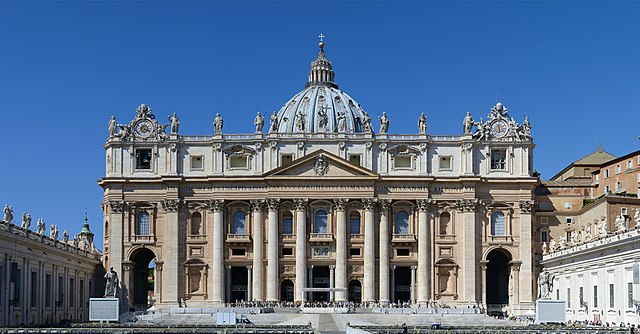
St. Peter’s Basilica in Rome
Church of Saint Ignatius of Loyola
Lastly, we invite you to discover a hidden treasure located just steps away from the Pantheon, which tourists have largely overlooked. Specifically, this is the Church of Saint Ignatius of Loyola in Campo Marzio, a stunning example of baroque architecture. Inside, you will find a faux dome showcasing the brilliant perspective work of artist Andrea Pozzo. Furthermore, the vaulted ceiling of the central nave, illustrating the ascension of Saint Ignatius, provides a remarkable visual experience through the use of trompe-l’œil techniques. Additionally, the church features a mirror that allows visitors to view the fresco’s reflection, offering an alternative and captivating perspective of the artwork.
Not only churches: discover cooking class in rome
(fonte immagine: Wikimedia Commons)
Related post