

Everyone knows Rome for its ruins, churches and Renaissance masterpieces. But step outside the historic center and you will find a completely different city: giant murals, painted tower blocks and whole neighborhoods turned into open-air galleries. Street art in Rome is one of the most underrated sides of the Eternal City, and it is totally free.
Here is where to find the best murals, how to get there and how to turn your street art walk into a full day of food and good vibes.
Why Street Art in Rome Is Worth Your Time
Rome has been a canvas for over 2,000 years, so it makes sense that its walls are still talking. Over the last two decades, Italian and international artists have transformed former industrial areas and public housing into some of the most exciting street art districts in Europe.
Moreover, these neighborhoods show you the Rome where Romans actually live. You get local cafés, real markets and zero crowds. In other words, it is the perfect plan after a few days of museums and monuments.
The Best Neighborhoods for Street Art in Rome
Ostiense: The Industrial Heart
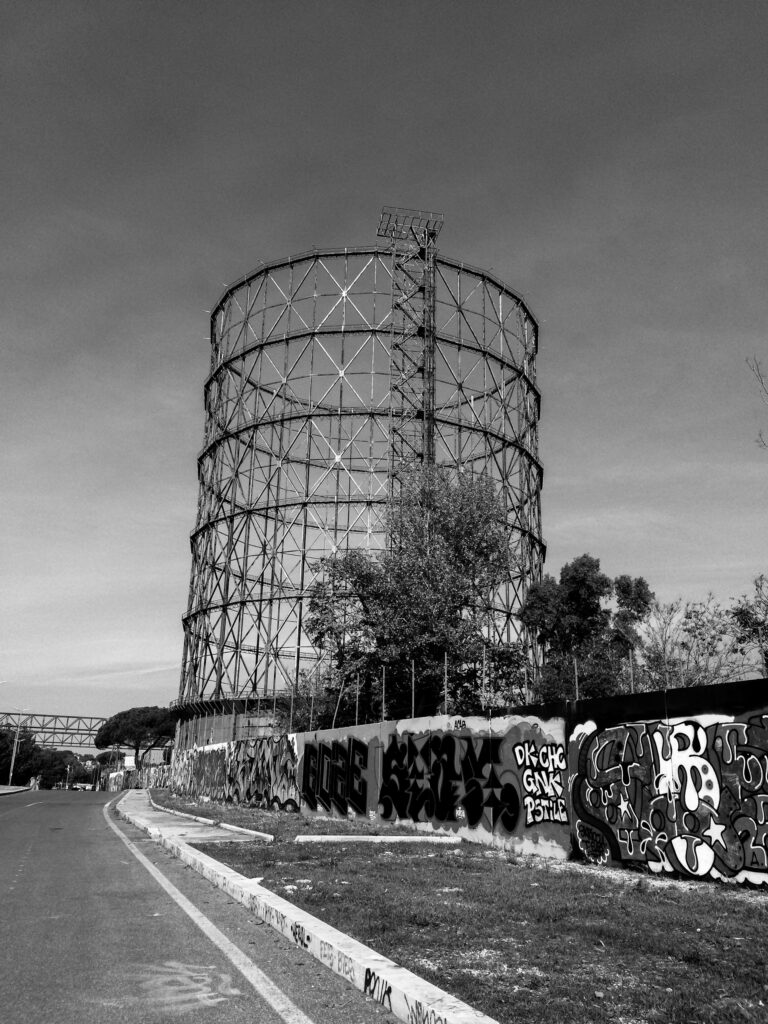
Ostiense is where the scene started. The old warehouses, the gasometer and the wide avenues make it feel more like Berlin than Rome. Start on Via del Porto Fluviale, where Blu’s massive “Fronte del Porto” covers an entire former military building with colorful faces. On the same street, look for Agostino Iacurci’s playful “Fish’n’Kids” and the huge eco-mural by Iena Cruz at the corner with Via del Gazometro.
Then walk to Via dei Magazzini Generali for JB Rock’s “Wall of Fame”, a long parade of famous faces.
Testaccio: The Jumping Wolf
Just next door, Testaccio is home to one of the most iconic pieces of street art in Rome: the “Jumping Wolf” by Belgian artist ROA on Via Galvani. The black-and-white wolf stretches across the side of an apartment building, a wild modern version of the she-wolf that, according to legend, raised Romulus and Remus.
After that, grab lunch at the Testaccio Market, one of the best places in the city for Roman street food.
Tor Marancia: A Museum Where People Live
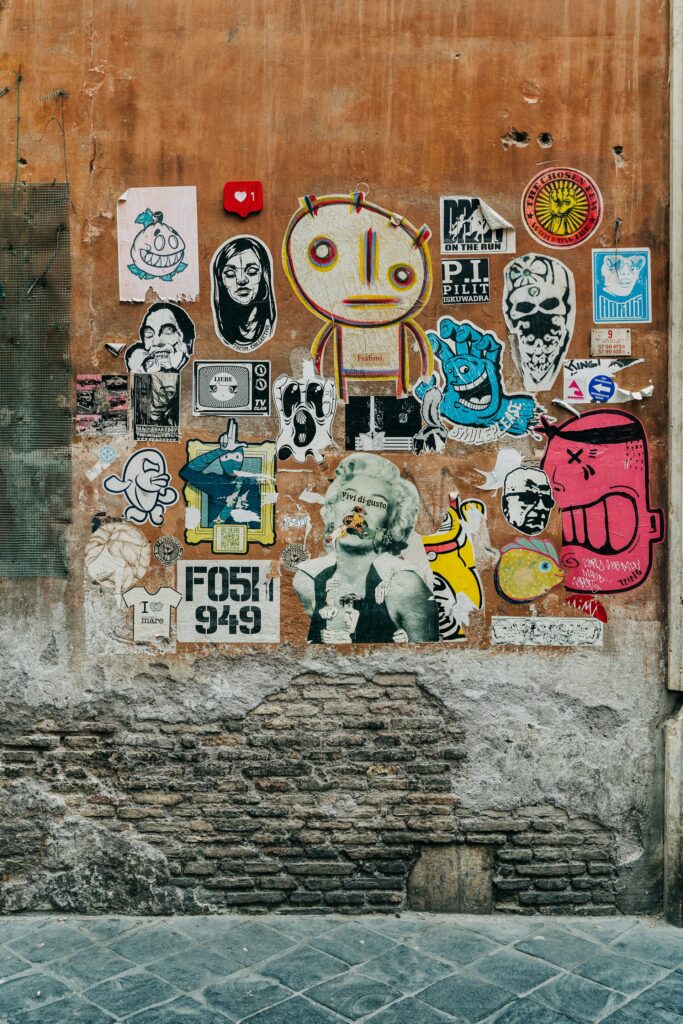
In 2015, the Big City Life project turned the social housing blocks of Tor Marancia into an open-air museum. Twenty-two artists from Italy and abroad painted huge murals on the buildings around Viale di Tor Marancia 63. Each work even has a small plaque with the artist’s name, just like in a real gallery. For many fans, this is the most impressive spot for street art in Rome.
To get there, take Metro B to Garbatella and walk for about 20 minutes. Remember that people live here, so be respectful when taking photos.
Quadraro: The Urban Museum
Quadraro is home to M.U.Ro., the Museum of Urban Art of Rome, created by artist David “Diavù” Vecchiato. The murals are spread across the neighborhood’s quiet streets, mixing poetry, local history and pop culture. Take Metro A to Porta Furba–Quadraro and start your walk around Via dei Lentuli.
Pigneto: Cinema and Poetry
Pigneto is Rome’s creative, slightly gritty neighborhood, full of bars, bookshops and late-night energy. Here, the walls pay tribute to film director Pier Paolo Pasolini, who shot scenes of his movies in these streets. Look for Maupal’s portrait of Pasolini on Via Fanfulla da Lodi, then stay for an aperitivo on Via del Pigneto. Few places mix nightlife and street art in Rome quite like this.
San Lorenzo: The Student Quarter
Close to the university, San Lorenzo is constantly changing. Its walls are covered with murals, stencils and paste-ups, especially around Via dei Volsci. It is also one of the best areas for cheap eats and nightlife.
Tips for Exploring Street Art in Rome
- Go in the morning: the light is better for photos and the streets are quieter.
- Use the metro: most street art areas are outside the center, but they are easy to reach by Metro A or B.
- Combine neighborhoods: Ostiense and Testaccio are walkable together, and Tor Marancia is not far away.
- Respect the locals: many murals are on residential buildings, so keep the noise down.
- Check before you go: street art changes all the time, and some works may be restored, covered or replaced.
For an updated map of murals and projects, you can also check the official tourism website Turismo Roma.
From Murals to Pasta: End the Day in the Kitchen
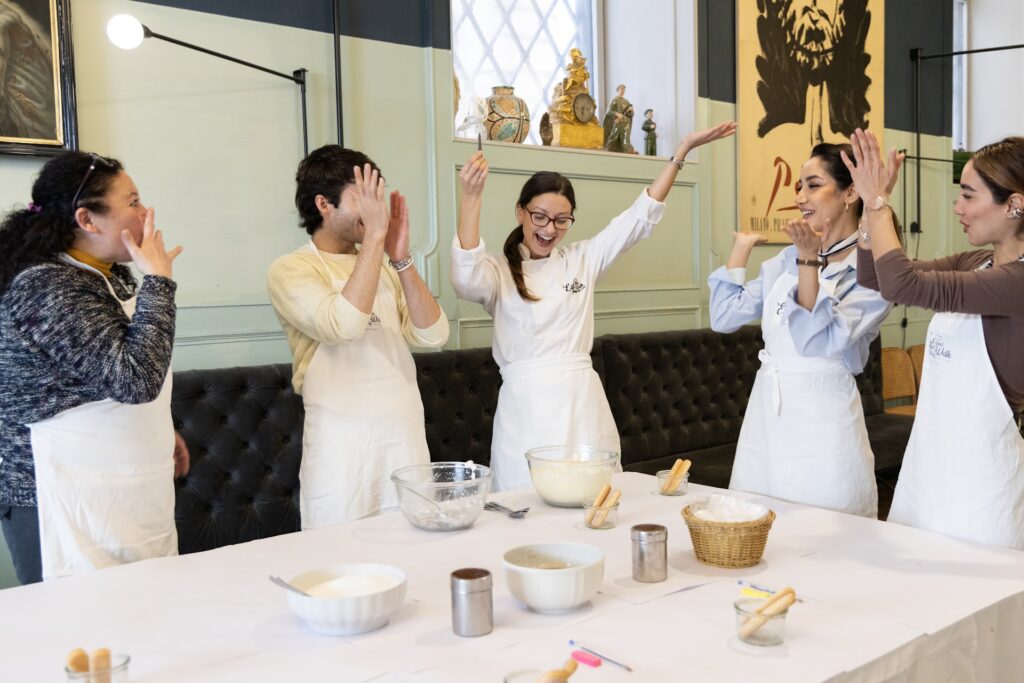
After a morning chasing murals, head back to the historic center and get your hands in the flour. At Eat and Walk Italy, you make fresh pasta and tiramisù with a local chef inside a real Roman restaurant near Piazza Navona, then eat everything with a glass of wine. It is creative, hands-on and a lot of fun, just like street art.
Check out our Spritz and Pasta Making class for an after-work vibe, or the 3 in 1 Cooking Class if you want to learn it all.
Want more ideas off the beaten path? Read our alternative guide to Rome and our Rome travel tips.
Final Thoughts
In short, street art in Rome shows you a side of the city that most visitors never see. It is free, it is authentic and it makes for incredible photos. So put on comfortable shoes, grab a metro ticket and go discover the Rome that is still being painted today.
Related post